
Recommended products

Karl Amadeus Hartmann
Country of origin:
Germany
Birthday:
August 2, 1905
Date of death:
December 5, 1963
About Karl Amadeus Hartmann
His concept of life oriented towards humanity is inscribed in all his scores. A warning in view of the atrocities of this world, but also resistance from the heart: a revocation of the spirits, love and life. (Udo Zimmermann)
Karl Amadeus Hartmann was born on 2 August 1905 in Munich and came into contact with art and music at an early stage. He studied trombone and composition at the Staatliche Akademie der Tonkunst in Munich from 1924 to 1929. Hartmann presented his first composition which displayed influences of jazz, Dadaism, persiflage technique and New Objectivity within the framework of the Opera Studio at the Bavarian State Opera. His Miserae for orchestra brought him initial international recognition at its performance at the IGNM Festival in Prague in 1935; in 1936, he won the Carillon competition in Geneva with his String Quartet No. 1. Following studies with Hermann Scherchen, Hartmann became the pupil of Anton Webern in 1941/42 whose compositional style exerted a strong influence in the following years.
In 1945, the composer was appointed as dramatic producer at the Bavarian State Theatre. Hartmann’s attempt to acquaint the audiences not only with classical modern works but also contemporary music by young composers became the guiding concept of the musica viva concerts which Hartmann organised right up until his death. The apocalyptic vision of the Gesangsszene for baritone and orchestra on texts from “Sodom and Gomorrha” remained unfinished and was published posthumously. Hartmann died on 5 December 1963.
After the seizure of power by the National Socialists in 1933 which resulted in a ban on the performance of Hartmann’s works, he regarded composition as his commitment to humanity. Several of his works are based on direct autobiographical experiences. The Sonate "27. April 1945" for piano originated as a reaction to an encounter with a train filled with prisoners who were expelled from the camp Dachau by the SS shortly before the end of the war. The sombre underlying atmosphere blends with the expression of solidarity and hope of salvation from tyranny. Melodic fragments with Jewish influences permeate the opera Simplicius Simplicissimus which was composed in 1934/35 (and revised in 1956/57) following encouragement by Scherchen and incorporates songs and chorales. The libretto based on Grimmelshausen’s Baroque novel affirms the dignity of the individual confronted by a world of barbarity and establishes parallels between the Thirty Years’ War and Fascism.
Alongside the violin concerto (Concerto funebre) composed in 1939, Hartmann’s eight symphonies provide an impressive and committed testimony to the composer’s instrumental oeuvre. During the post-war years, Hartmann began to revise the substantial symphonic sketches which he had created during his period of internal emigration. The preliminary phases of the 1st Symphony with the subtitle “Versuch eines Requiems” [Attempt at a Requiem] date back to the year 1935 and the 3rd Symphony (1948/49) is based on a “Sinfonia tragica” from 1940. The Symphonie Concertante (5th Symphony), completed in 1951, also utilises material from a previously conceived composition, the burlesque Concertino for trumpet and wind ensemble (1933). Within the framework of a compositional commission by the Bavarian broadcasting company Bayerischer Rundfunk, Hartmann revised his “Symphonie L’Oeuvre” based on Zola which was given its first performance in 1953 as the 6th Symphony. In 1963, the 8th Symphony was premiered in Cologne. The work appears as the concentrated sum of the entire symphonic and concerto oeuvre of Hartmann with its juxtaposition of scherzo, fugal and finale elements.
From 1948 onwards, Hartmann’s compositions were performed with increasing frequency. In 1949, he was awarded the Music Prize of the City of Munich. This was followed by the Kunstpreis from the Bavarian Academy of the Fine Arts (1950), the Arnold Schoenberg Medal from the IGNM (1954), the Große Kunstpreis from the federal state of North-Rhine Westphalia (1957) and the Ludwig Spohr Prize from the city of Braunschweig (1959), the Schwabinger Kunstpreis (1961) and the Bavarian Order of Merit (1959). Hartmann became a member of the Academy of Arts in Munich (1952) and in Berlin (1955) and received an honorary doctorate from the Spokane University in Washington in 1962.
Worklist
Chronology
1905
Geboren am 2. August in München
1919
Eintritt in die Lehrerbildungsanstalt Pasing bei München
1924-29
Studium an der staatlichen Akademie der Tonkunst München
1928
Gründung der Konzerte bei der Künstlervereinigung "Die Juryfreien"
1931
Uraufführung von "Burleske Musik" für Bläser, Schlagzeug und Klavier; das Stück ist Elisabeth Reussmann, seiner späteren Frau gewidmet.
1933
Uraufführung des "Concertino" für Trompete mit 7 Soloinstrumenten in Straßburg
1933-45
In diesen Jahren entstehen mehrerer große Orchesterwerke, von denen nur wenige zu Lebzeiten des Komponisten aufgeführt werden ("Miserae", das Tryptichon "Sinfoniae Dramaticae": "Symphonische Ouvertüre" – "Symphonische Hymnen" – Symphonische Suite "Vita Nova"). Einige Werke finden in den späteren Symphonien Nr. 1 und Nr. 3-6 Verwendung. ("Symphonie L’Œuvre", "Symphonie für Streicher", "Sinfonia tragica", "Klagegesang", "Lamento")
1934
Heirat mit Elisabeth Reussmann
1935
Uraufführung der Symphonischen Dichtung "Miserae" auf dem IGNM-Fest in Prag unter der Leitung von Hermann Scherchen
1935
Geburt des Sohnes Richard
1936
Uraufführung des "1. Streichquartetts" während des Kammerwettbewerbs Carillon in Genf. Das "1. Streichquartett" wird dort mit dem 1. Preis ausgezeichnet.
1937
Auszeichnung der Kantate "Friede Anno 48" durch die Emil-Hertzka-Stiftung Wien
1940
Uraufführung des "Concerto funebre" für Solo-Violine und Streichorchester in St. Gallen, Schweiz
1942
Privatunterricht bei Anton von Webern in Maria Enzersdorf bei Wien
1945
Musikdramaturg an der Bayerischen Staatsoper
1945
Hartmann begründet die Musica-Viva-Konzerte, die er bis zu seinem Tode gestaltet und leitet.
1947
Uraufführung der "Symphonischen Ouvertüre" während der Darmstädter Ferienkurse
1948
Konzertante Uraufführung von "Simplicius Simplicissimus" im Bayerischen Rundfunk, München
1948
Uraufführung der "4. Symphonie" in München
1949
Szenische Uraufführung von "Simplicius Simplicissimus" in einer Inszenierung von Erich Bormann in Köln
1949
Uraufführung des "2. Streichquartetts" mit dem Vegh-Quartett in Mailand
1949
Musikpreis der Stadt München
1950
Uraufführung von "Adagio" (2. Symphonie) im Rahmen der Donaueschinger Musiktage mit dem SWR Sinfonieorchester unter der Leitung von Hans Rosbaud
1950
Uraufführung der "3. Symphonie" in München mit dem Symphonieorchester des Bayerischen Rundfunks unter der Leitung von Erich Schmid
1950
Kunstpreis der Bayerischen Akademie der Schönen Künste München
1951
Uraufführung der "Symphonie concertante" (5. Symphonie) in Stuttgart mit dem Radio-Sinfonieorchester Stuttgart unter der Leitung von Hans Müller-Kray
1952
Hartmann wird Mitglied der Bayerischen Akdemie der Schönen Künste.
1953
Uraufführung der "6. Symphonie" in München
1953
Uraufführung des "Konzerts" für Klavier, Bläser und Schlagzeug während der Donaueschinger Musiktage
1954
Hartmann erhält die Schönberg-Medaille der IGNM.
1955
Mitglied der Akademie der Schönen Künste Berlin
1956
Uraufführung des "Konzert für Bratsche und Klavier" in Frankfurt am Main mit dem hr-Sinfonieorchester
1957
Uraufführung der Neufassung der "1. Symphonie" mit den Wiener Symphonikern in Wien
1957
Großer Kunstpreis des Landes Nordrhein-Westfalen
1959
Uraufführung der "7. Symphonie" in Hamburg mit dem NDR Sinfonieorchester unter der Leitung von Hans Schmidt-Isserstedt
1959
Uraufführung der Neufassung des "Concerto funebre" in Braunschweig
1961
Hartmann wird mit dem Kunstpreis der Stadt Berlin ausgezeichnet.
1962
Ehrendoktor des Spokane Conservatory, Washington
1963
Uraufführung der "8. Symphonie" in Köln
1963
Am 5. Dezember stirbt Karl Amadeus Hartmann in München.
1964
Uraufführung der "Gesangszene" zu Worten aus Sodom und Gomorrha von Jean Giraudoux in Frankfurt am Main
1969
Uraufführung des "Kammerkonzerts" für Klarinette, Streichquartett und Streichorchester mit dem Tonhalle-Orchester in Zürich
1982
Uraufführung der Sonate "27. April 1945" während des Musica Viva Festivals in München
1987
Uraufführung der "2. Sonate" für Violine während des Musica Viva Festivals in München
1988
Uraufführung von "Wachsfigurenkabinett" während der 1. Münchener Biennale
1990
Uraufführung von "Klagegesang" mit dem Pittsburgh Symphony Orchestra unter der Leitung von Loril Maazel in Pittsburgh.
2008
Uraufführung der "Symphonie L’Œuvre" während des Musica Viva Festivals in München
Products
-
 "An schöne Stunden denk ich immer"Composer: Karl Amadeus HartmannSeries: Edition Schott
1. Sonate
Brand: Schott Music
Instrumentation: violinProduct number: ED 7520Product TypeAs low as £14.50 -
 "Carillon"Composer: Karl Amadeus HartmannMedia Type: Sheet musicEdition: Study scoreSeries: 1. Streichquartett
Brand: Schott Music
Instrumentation: String quartetProduct number: ED 4561£16.50Not in stock, but can be ordered - usually despatched (or ready for collection) within 7 days -
 "Carillon"Composer: Karl Amadeus HartmannEdition: Set of partsSeries: 1. Streichquartett
Brand: Schott Music
Instrumentation: string quartetProduct number: ED 4626Product TypeAs low as £21.50 -
 Versuch eines RequiemsComposer: Karl Amadeus HartmannEdition: Study scoreSeries: Music Of Our Time
1. Symphonie
Brand: Schott Music
Instrumentation: altovoice and orchestraProduct number: ED 4577Product TypeAs low as £23.99 -
 Composer: Karl Amadeus HartmannMedia Type: Sheet musicSeries: 1. Sonate
Brand: Schott Music
Instrumentation: violinProduct number: ED 7521£18.99Not in stock, but can be ordered - usually despatched (or ready for collection) within 7 days -
 Composer: Karl Amadeus HartmannEdition: Set of partsSeries: Edition Schott
2. Streichquartett
Brand: Schott Music
Instrumentation: string quartetProduct number: ED 4627Product TypeAs low as £28.50 -
 Composer: Karl Amadeus HartmannEdition: Study scoreSeries: 2. Streichquartett
Brand: Schott Music
Instrumentation: string quartetProduct number: ED 4562Product TypeAs low as £28.99 -
 based on a piano music by Karl Amadeus HartmannComposer: Karl Amadeus Hartmann | Hans Werner HenzeEdition: Study scoreSeries: Music Of Our Time
3 Orchesterstücke
Brand: Schott Music
Instrumentation: orchestraProduct number: ED 8954Product TypeAs low as £22.50 -
 Composer: Karl Amadeus HartmannEdition: Study scoreSeries: Music Of Our Time
3. Symphonie
Brand: Schott Music
Instrumentation: Large OrchestraProduct number: ED 4273Product TypeAs low as £21.50 -
 Composer: Karl Amadeus HartmannEdition: Study scoreSeries: Music Of Our Time
4. Symphonie
Brand: Schott Music
Instrumentation: string orchestraProduct number: ED 4564Product TypeAs low as £16.50 -
 Composer: Karl Amadeus HartmannEdition: Study scoreSeries: Music Of Our Time
6. Symphonie
Brand: Schott Music
Instrumentation: large orchestraProduct number: ED 4419Product TypeAs low as £28.50 -
 Composer: Karl Amadeus HartmannEdition: Study scoreSeries: Music Of Our Time
7. Symphonie
Brand: Schott Music
Instrumentation: large orchestraProduct number: ED 5005Product TypeAs low as £29.99 -
 Composer: Karl Amadeus HartmannEdition: Study scoreSeries: Music Of Our Time
8. Symphonie
Brand: Schott Music
Instrumentation: large orchestraProduct number: ED 5027Product TypeAs low as £22.99 -
 Composer: Karl Amadeus HartmannEdition: Study scoreSeries: Music Of Our Time
Adagio
Brand: Schott Music
Instrumentation: Large OrchestraProduct number: ED 4405Product TypeAs low as £19.50 -
 Composer: Karl Amadeus HartmannEdition: Piano reduction with solo partBrand: Schott Music
Instrumentation: clarinet, string quartet and string orchestraProduct number: KLB 53Product TypeAs low as £25.50 -
 Composer: Karl Amadeus HartmannEdition: Piano reduction with solo partSeries: Edition Schott
La Tromba
Concertino
Brand: Schott Music
Instrumentation: Trumpet with 7 Solo-Instruments (Clarinet in B flat, BassClarinet in B flat, Bassoon, Contrabassoon, French Horn in F, Trumpet in C, Tuba)Product number: TR 21Product TypeAs low as £19.50 -
 begleitet von Bläsern und SchlagzeugComposer: Karl Amadeus HartmannEditor: Wilhelm KillmayerEdition: Piano reduction with solo partBrand: Schott Music
Instrumentation: viola, piano, wind instruments and percussionProduct number: VAB 13Product TypeAs low as £23.99 -
 begleitet von Bläsern und SchlagzeugComposer: Karl Amadeus HartmannEdition: Study scoreBrand: Schott Music
Instrumentation: viola, piano, wind instruments and percussionProduct number: ED 4581Product TypeAs low as £29.99 -
 Composer: Karl Amadeus HartmannMedia Type: Sheet musicEdition: Study scoreSeries: Music Of Our Time
Konzert
Brand: Schott Music
Instrumentation: Piano, Wind Instruments and PercussionProduct number: ED 4421£24.99Not in stock, but can be ordered - usually despatched (or ready for collection) within 7 days -
 Composer: Karl Amadeus HartmannEdition: Piano reduction with solo partSeries: Edition Schott
Concerto funebre
Brand: Schott Music
Instrumentation: violin and string orchestraProduct number: ED 5167Product TypeAs low as £16.99 -
 Composer: Karl Amadeus HartmannEdition: Study scoreSeries: Music Of Our Time
Concerto funebre
Brand: Schott Music
Instrumentation: solo-violin and string orchestraProduct number: ED 5002Product TypeAs low as £11.99 -
 Composer: Karl Amadeus HartmannMedia Type: Sheet musicEdition: Score and partsBrand: Schott Music
Instrumentation: clarinet, horn, bassoon, trumpet and tromboneProduct number: ED 6533£27.50Not in stock, but can be ordered - usually despatched (or ready for collection) within 7 days -
 Composer: Karl Amadeus HartmannMedia Type: Sheet musicBrand: Schott Music
Instrumentation: pianoProduct number: ED 7885£19.99Not in stock, but can be ordered - usually despatched (or ready for collection) within 7 days -
 zu Worten aus "Sodom und Gomorrha"Composer: Karl Amadeus HartmannEdition: Study scoreSeries: Music Of Our Time
Gesangsszene
Brand: Schott Music
Instrumentation: baritone and orchestraProduct number: ED 5506Product TypeAs low as £21.50 -
 Product TypeAs low as £11.99
 -
 Composer: Karl Amadeus HartmannEdition: Full and study scoreSeries: Music Of Our Time
Kammerkonzert
Brand: Schott Music
Instrumentation: clarinet, string quartet and string orchestraProduct number: ED 9610Product TypeAs low as £24.99 -
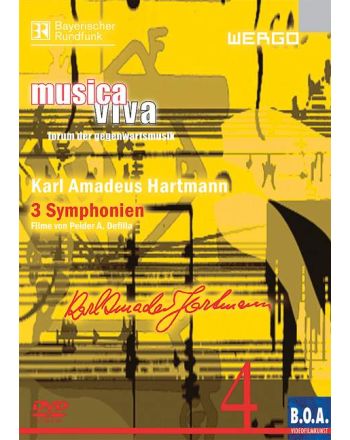 MUSICA VIVA - Forum der Gegenwartsmusik£25.50Not in stock, but can be ordered
 -
Composer: Karl Amadeus HartmannMedia Type: Sheet musicEdition: Full and study scoreSeries: Music Of Our Time
Klagegesang
Brand: Schott Music
Instrumentation: large orchestraProduct number: ED 7887£37.50Not in stock, but can be ordered - usually despatched (or ready for collection) within 7 days -
 KantateComposer: Karl Amadeus HartmannSeries: Edition Schott
Brand: Schott Music
Instrumentation: soprano and pianoProduct number: ED 4906Product TypeAs low as £17.99 -
Composer: Karl Amadeus HartmannEdition: Set of partsSeries: Kleines Konzert
Brand: Schott Music
Instrumentation: String Quartet and Percussion (1-2 Player)Product number: ED 5849-01Product TypeAs low as £22.99 -
 Composer: Karl Amadeus HartmannEdition: PartiturSeries: Kleines Konzert
Brand: Schott Music
Instrumentation: string quartet and percussion (1-2 player)Product number: ED 5849Product TypeAs low as £19.50 -
 Composer: Karl Amadeus HartmannMedia Type: Sheet musicBrand: Schott Music
Instrumentation: pianoProduct number: ED 7689£11.50Not in stock, but can be ordered - usually despatched (or ready for collection) within 7 days -
Composer: Karl Amadeus HartmannMedia Type: Sheet musicBrand: Schott Music
Instrumentation: pianoProduct number: ED 7690£11.50Not in stock, but can be ordered - usually despatched (or ready for collection) within 7 days -
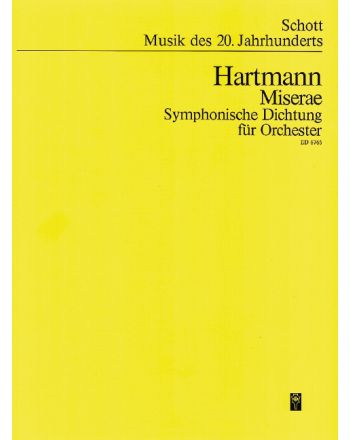 Poème symphoniqueComposer: Karl Amadeus HartmannMedia Type: Sheet musicEdition: Study scoreSeries: Music Of Our Time
Miserae
Brand: Schott Music
Instrumentation: orchestraProduct number: ED 6766£27.50Not in stock, but can be ordered - usually despatched (or ready for collection) within 7 days -
 Nach Skizzen Karl Amadeus Hartmanns vervollständigt von Wilfried Hiller (1991)Composer: Karl Amadeus HartmannArranger: Wilfried HillerMedia Type: Sheet musicEdition: Performing scoreBrand: Schott Music
Instrumentation: percussion ensemble and piano four handsProduct number: ED 7785£20.50Not in stock, but can be ordered - usually despatched (or ready for collection) within 7 days -
 3 Szenen aus seiner JugendProduct TypeAs low as £39.99
 -
 3 Szenen aus seiner JugendComposer: Karl Amadeus HartmannMedia Type: Sheet musicSeries: Simplicius Simplicissimus
Brand: Schott Music
Language: GermanProduct number: ED 4324£50.99Not in stock, but can be ordered - usually despatched (or ready for collection) within 7 days -
 2nd Piano SonataComposer: Karl Amadeus HartmannSeries: Edition Schott
Brand: Schott Music
Instrumentation: pianoProduct number: ED 6870Product TypeAs low as £22.99 -
 Composer: Karl Amadeus HartmannSeries: Edition Schott
Brand: Schott Music
Instrumentation: pianoProduct number: ED 6258Product TypeAs low as £11.99 -
Composer: Karl Amadeus HartmannMedia Type: Sheet musicEdition: Study scoreSeries: Music Of Our Time
Symphonische Hymnen
Brand: Schott Music
Instrumentation: large orchestraProduct number: ED 6650£36.99Not in stock, but can be ordered - usually despatched (or ready for collection) within 7 days -
Composer: Karl Amadeus HartmannMedia Type: Sheet musicEdition: Study scoreBrand: Schott Music
Instrumentation: large orchestraProduct number: ED 6761£31.50Not in stock, but can be ordered - usually despatched (or ready for collection) within 7 days -
 (Symphonie No. 5)Composer: Karl Amadeus HartmannEdition: Study scoreBrand: Schott Music
Instrumentation: OrchestraProduct number: ED 4404Product TypeAs low as £21.50 -
Composer: Karl Amadeus HartmannMedia Type: Sheet musicEdition: Full and study scoreSeries: Music Of Our Time
Sinfonia tragica
Brand: Schott Music
Instrumentation: orchestraProduct number: ED 7790£45.50Not in stock, but can be ordered - usually despatched (or ready for collection) within 7 days -
 Composer: Karl Amadeus HartmannMedia Type: Sheet musicBrand: Schott Music
Instrumentation: violinProduct number: ED 7531£18.99Not in stock, but can be ordered - usually despatched (or ready for collection) within 7 days -
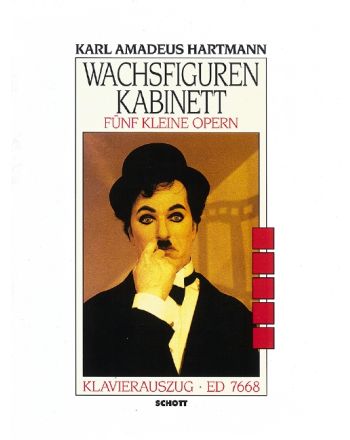 5 kleine OpernComposer: Karl Amadeus HartmannMedia Type: Sheet musicSeries: Chaplin-Ford-Trott
Brand: Schott Music
Product number: ED 7668£47.99Not in stock, but can be ordered - usually despatched (or ready for collection) within 7 days


