
Recommended products
Lieferzeit
2-3 Tage
CD
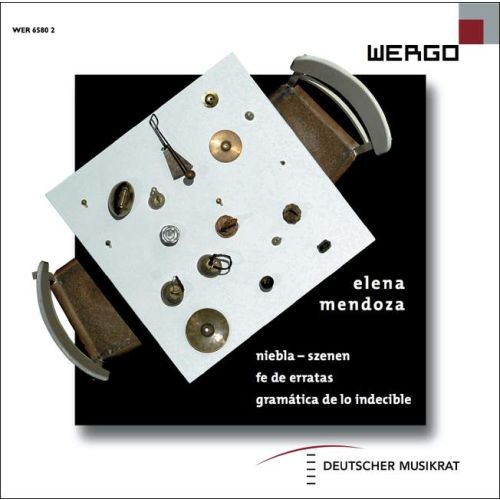
Scenes from "Niebla" / Fe de erratas / Gramática de lo indecible
Product number: WER 65802
£13.99
Incl. VAT, Excl. Shipping
Product Details
Description
The scenes from the music theatre stage work “Niebla”, written by the composer in joint authorship with director Matthias Rebstock, are the heart of the CD. The work is based on the eponymous novel by the Spanish author Miguel de Unamuno.
“Those who don't merge the things will themselves become bewildered." The "things" here are the constantly interweaving levels of reality and fiction in Miguel de Unamuno's novel “Niebla” of 1914. The philosophical core of his book is the pleasure he takes in blurring the boundaries between them. It is this core that Elena Mendoza drew on when she chose Unamuno's novel as the basis of her full-length piece of music theatre. In the novel, the enigmas and intangibilities of human existence are captured in a central image: fog. They determine the formal shape of the theater piece in that identical situations proceed differently, are viewed from different perspectives, or are peopled with different characters.
“Fe de erratas” similarly pursues the idea of inventing a musico-theatrical situation by constantly correcting things just heard. Six textual fragments by Felipe Benítez Reyes on the subject of the literary imagination, coupled with sharply delineated musical modules, are shuffled semantically and compositionally in ever-new ways to form a sort of isorhythm between music and text.
The title of Mendoza's “Gramática de lo indecible” ("Grammar of the
inexpressible") for instrumental ensemble was inspired by a saying from Ludwig Wittgenstein that is interpolated into the composition at the end of the spoken material. As in “Fe de erratas”, here canonic and isorhythmic techniques function as framing sets of rules. As in Mendoza's other works, the result is a sonic and semantic kaleidoscope of extraordinary sensual presence, an ambivalent game with realities that resists any form of pigeonholing.
“Those who don't merge the things will themselves become bewildered." The "things" here are the constantly interweaving levels of reality and fiction in Miguel de Unamuno's novel “Niebla” of 1914. The philosophical core of his book is the pleasure he takes in blurring the boundaries between them. It is this core that Elena Mendoza drew on when she chose Unamuno's novel as the basis of her full-length piece of music theatre. In the novel, the enigmas and intangibilities of human existence are captured in a central image: fog. They determine the formal shape of the theater piece in that identical situations proceed differently, are viewed from different perspectives, or are peopled with different characters.
“Fe de erratas” similarly pursues the idea of inventing a musico-theatrical situation by constantly correcting things just heard. Six textual fragments by Felipe Benítez Reyes on the subject of the literary imagination, coupled with sharply delineated musical modules, are shuffled semantically and compositionally in ever-new ways to form a sort of isorhythm between music and text.
The title of Mendoza's “Gramática de lo indecible” ("Grammar of the
inexpressible") for instrumental ensemble was inspired by a saying from Ludwig Wittgenstein that is interpolated into the composition at the end of the spoken material. As in “Fe de erratas”, here canonic and isorhythmic techniques function as framing sets of rules. As in Mendoza's other works, the result is a sonic and semantic kaleidoscope of extraordinary sensual presence, an ambivalent game with realities that resists any form of pigeonholing.
Contents
Scenes from "Niebla" music theatre in joint authorship with Matthias Rebstock, based on the eponymous novel by Miguel de Unamuno
Fe de erratas for six voices a cappella
Gramática de lo indecible for flute, clarinet, saxophone, violin, cello, piano and percussion
Fe de erratas for six voices a cappella
Gramática de lo indecible for flute, clarinet, saxophone, violin, cello, piano and percussion
More Information
Title:
Scenes from "Niebla" / Fe de erratas / Gramática de lo indecible
Brand:
Wergo
Playing time:
66 ′47 ′′
Technical Details
Product number:
WER 65802
MAN EAN:
4010228658026
Weight:
0,11 kg
Attachments
Persons
More from this series
German Music Council / Contemporary Music Edition
In its renowned Contemporary Music Edition the German Music Council set itself the task of creating a basic listening library of contemporary composition in Germany. The edition is distinguished by the high quality of the performances and of the accompanying texts. It includes recordings by renowned interpreters and ensembles, often under the direction of the composer; the carefully edited booklets present the composers and musicologists in analyses of the works and in aesthetic commentaries. For more information on the composers within the Contemporary Music Edition (including biographies, lists of works and audio samples), please click here.


Reviews
Only registered users can write reviews. Please Sign in or create an account


