
Recommended products

Aribert Reimann
Country of origin:
Germany
Birthday:
March 4, 1936
Date of death:
March 13, 2024
About Aribert Reimann
Aribert Reimann’s music assimilates an essential artistic constellation in the first modern period, namely the issue of the character of a work and the autonomy of art in view of an externally and internally disjointed society. Art can no longer be of comfort … (Wolfgang Rathert)
Life and Artistic Development
Aribert Reimann was born on 4 March 1936 in Berlin. He grew up in a musical family; his father was an organist and director of the Berlin State and Cathedral Choir, his mother was a renowned oratorio singer and singing teacher. Reimann composed his first lieder with piano at the age of ten.
After having passed his Abitur [higher education entrance examination] in 1955, he worked as repetiteur in the Studio of the State Opera House in Berlin and simultaneously studied composition with Boris Blacher and Ernst Pepping and piano with Otto Rausch at the Academy of Music in Berlin. He gave his first concerts as pianist and lied accompanist in 1957. A year later, he attended the University of Vienna to study musicology. His ballet Stoffreste based on a libretto by Günter Grass received its premiere at the Städtische Bühnen in Essen in 1959.
Music theatre and lieder provided the nucleus for Reimann’s further artistic development. As early as 1971, the composer was awarded the German Critics’ Prize for his complete oeuvre up to that date. From 1974 to 1983, he held a professorship at the Hamburg Musikhochschule with a focus on contemporary song. In 1983, he was appointed to the Berlin Hochschule der Künste in the same capacity; his work there ended in 1998. Aribert Reimann lived in Berlin until his death on 13 March 2024.
Vocal and Instrumental Works
The affinity for the human voice provides a strong impulse for Aribert Reimann’s compositional activity. Over many years, he wrote song arrangements for soprano and string quartet, including “… oder soll es Tod bedeuten?” after Mendelssohn (1996) and Frauenliebe und Leben after Schumann (2019). Alongside lied settings of texts by authors such as Paul Celan, James Joyce, Joseph von Eichendorff and Louïze Labé, the composer has also produced numerous chamber music works, solo concertos and orchestral works such as Miniatures for string quartet (2004/05), the two Piano Concertos (1961 und 1972), Seven Fragments for Orchestra (in memoriam Robert Schumann, 1988) and the orchestral work Zeit-Inseln (2004).
Operas and Music Theatre
Reimann’s operatic output began in 1965 with the first performance of Ein Traumspiel based on a text by August Strindberg in Kiel. This was followed by Melusine, based on the play by Yvan Goll, premiered at the Schwetzingen Festival in 1971. With his opera Lear (1978, Bayerische Staatsoper), Aribert Reimann was able to win over not only specialists and critics but also a wider public for his characteristic personal style: the work has been performed internationally in more than thirty productions.
With its basis on the play by William Shakespeare, the composer created music with an almost physical directness which is at all times aware of its existence on the borderline to being struck dumb. In 1984, Die Gespenstersonate, also on a text by August Strindberg, was premiered in Berlin and, in 1986, Troades based on the play by Euripides in the version by Franz Werfel.
Reimann undertook a further ambitious literary project from 1990 to1992 with his opera Das Schloß based on the novel by Franz Kafka (first performance 1992): the nightmarish and labyrinthine atmosphere of the text is reflected in a chamber musical and fragile texture of the music. The premiere of Bernarda Albas Haus, based on the text by Federico García Lorca, took place at the Bayerische Staatsoper in Munich in 2000.
Considered as one of the leading German-speaking opera composers, Aribert Reimann has received a commission from the Vienna State Opera to compose an opera on Medea based on the play of the same name by Franz Grillparzer which has been awarded "World Première of the Year" by German magazine "Opernwelt". His latest music theatre work, L'Invisible, is based on three dramas by Maurice Maeterlink and was premiered in autmn 2017 at Deutsche Oper Berlin.
Awards and Honors
Aribert Reimann received a large number of honours and awards. Among others, the composer was awarded the Grand Cross of Merit of the Order of Merit of the Federal Republic of Germany in 1985, the Prix de composition musicale de la Fondation Prince Pierre de Monaco in 1986, the Bach Prize of the Hanseatic City of Hamburg in 1987, the Order of Merit of the State of Berlin in 1988, the Frankfurt Music Prize in 1991, the Grand Cross of Merit with Star of the Order of Merit of the Federal Republic of Germany in 1995, and the Golden Needle of the Dramatiker Union in 1999. In the same year, Reimann was appointed Commandeur de l’Ordre du Mérite Culturel de la Principauté de Monaco. In 2002, he received the Berlin Art Prize for Music and the plaque of the Free Academy of Arts in Hamburg, followed by the Arnold Schönberg Prize in 2006, the Ernst von Siemens Music Prize in 2011 as well as the German Music Authors’ Prize in the category Opera/Song Composition, and the Robert Schumann Prize for Poetry and Music in 2016.
In 2018, he was awarded the German theatre prize DER FAUST for his lifetime achievement; in 2024, he received the GEMA Music Authors’ Prize, likewise for his lifetime achievement. He was a member of the Order Pour le Mérite for Sciences and Arts, an honorary member of the German Music Council, and a member of the Akademie der Künste Berlin, the Bavarian Academy of Fine Arts, the Free Academy of Arts in Hamburg and the Saxon Academy of Arts.
Worklist
Gallery

(c) Schott Promotion / Peter Andersen

Aribert Reimann, Wolfgang Rihm und Jörg Widmann beim Festival Heidelberger Frühling 2006. Photo: Milan Wagner

(c) Schott Promotion / Gaby Gerster

(c) Schott Promotion / Gaby Gerster

(c) Schott Promotion / Gaby Gerster

(c) Schott Promotion / Gaby Gerster

(c) Schott Promotion / Gaby Gerster

Für hochauflösende Fotos kontaktieren Sie bitte: infoservice@schott-music.com
Chronology
1936
geboren am 4. März in Berlin
1955
Abitur in Berlin; Korrepetitor am Studio der Städtischen Oper Berlin
1955-60
Kompositionsstudium bei Boris Blacher und Ernst Pepping, gleichzeitig Klavierstudium bei Otto Rausch in Berlin
1957
Beginn der Pianistenlaufbahn als Solist und Liedbegleiter
1958
Studium der Musikwissenschaft an der Universität Wien
1962
Berliner Kunstpreis 1962 für Musik (Junge Generation)
1963
Rompreis und Aufenthalt in der Villa Massimo
1965
Hauptpreis zum Robert-Schumann-Preis 1964 der Stadt Düsseldorf
Uraufführung der Oper "Ein Traumspiel" an den Bühnen der Landeshauptstadt Kiel
1966
Förderungspreis für junge Komponisten der Stadt Stuttgart
1971
Mitglied der Akademie der Künste Berlin
Uraufführung der Oper "Melusine" bei den Schwetzinger Festspielen
Kritikerpreis für Musik (1970) für sein bisheriges Gesamtwerk und besonders für die Musik zu dem Ballett "Die Vogelscheuchen"
Uraufführung der Oper "Melusine" bei den Schwetzinger Festspielen
Kritikerpreis für Musik (1970) für sein bisheriges Gesamtwerk und besonders für die Musik zu dem Ballett "Die Vogelscheuchen"
1974-83
Professur für das zeitgenössische Lied an der Hamburger Musikhochschule
1976
Mitglied der Bayerischen Akademie der Schönen Künste, München
1978
Uraufführung der Oper "Lear" an der Bayerischen Staatsoper München
1983-98
Professur für das zeitgenössische Lied an der Hochschule der Künste in Berlin
1984
Uraufführung der Oper "Die Gespenstersonate" am Hebbel-Theater Berlin
1985
Mitglied der Freien Akademie der Künste Hamburg
Verleihung des Großen Verdienstkreuzes des Verdienstordens der Bundesrepublik Deutschland
Ludwig-Spohr-Preis der Stadt Braunschweig
Verleihung des Großen Verdienstkreuzes des Verdienstordens der Bundesrepublik Deutschland
Ludwig-Spohr-Preis der Stadt Braunschweig
1986
Uraufführung der Oper "Troades" an der Bayerischen Staatsoper München
Prix de composition musicale de la Fondation Prince Pierre de Monaco
Prix de composition musicale de la Fondation Prince Pierre de Monaco
1987
Bach-Preis der Freien und Hansestadt Hamburg
1988
Verdienstorden des Landes Berlin
1991
Verleihung des Frankfurter Musikpreises
1992
Uraufführung der Oper "Das Schloß" an der Deutschen Oper Berlin
1993
Aufnahme in den Orden "Pour le Mérite" für Wissenschaften und Künste; Officier de "L'Ordre du Mérite Culturel" de la Principauté de Monaco
1995
Verleihung des Großen Verdienstkreuzes mit Stern des Verdienstordens der Bundesrepublik Deutschland
1999
Commandeur de "L'Ordre de Mérite Culturel" de la Principauté de Monaco; "Goldene Nadel" der Dramatiker Union
2000
Uraufführung der Oper "Bernarda Albas Haus" an der Bayerischen Staatsoper München
2002
Musikpreis der Kulturstiftung Dortmund 2002; Ehrensenator der Universität der Künste Berlin; Kunstpreis Berlin 2002 für Musik; Plakette der Freien Akademie der Künste in Hamburg
2003
Eintrag in das Goldene Buch der Stadt Bonn; Bayerischer Maximiliansorden für Wissenschaft und Kunst
2005
Ehrenmitglied des Deutschen Musikrats; Mitglied des "Ordre de Saint Charles" de la Principauté de Monaco
2006
Arnold Schönberg Preis Berlin
2010
"Medea" wird in der Kritiker-Umfrage der Zeitschrift Opernwelt zur Uraufführung des Jahres gewählt.
2011
Deutscher Musikautorenpreis der GEMA (Kategorie "Oper/Lied")
Ernst von Siemens Musikpreis
Ernst von Siemens Musikpreis
2016
Robert Schumann-Preis für Dichtung und Musik
2017
Uraufführung der Oper "L'Invisible" an der Deutschen Oper Berlin
2018
Deutscher Theaterpreis DER FAUST für das Lebenswerk
2019
Capell-Compositeur bei der Sächsischen Staatskapelle Dresden
2024
GEMA-Musikautor*innenpreis für das Lebenswerk
2024
gestorben am 13. März in Berlin
Products
-
 Eight Lieder and one fragment by Felix Mendelssohn BartholdyComposer: Felix Mendelssohn Bartholdy | Aribert ReimannEdition: Score and partsSeries: Edition Schott
Brand: Schott Music
Instrumentation: soprano and string quartetProduct number: ED 8762Product TypeAs low as £39.99 -
 Trio for Soprano, Clarinet in A and PianoComposer: Aribert ReimannEdition: Performing scoreSeries: Edition Schott
Brand: Schott Music
Instrumentation: soprano, clarinet in A and pianoProduct number: ED 20412Product TypeAs low as £25.50 -
 nach Gedichten von Gabriela MistralComposer: Aribert ReimannMedia Type: E-score PDFBrand: Bote & Bock
Instrumentation: voice and pianoLanguage: GermanProduct number: BB 5000723 Q46588£5.99available for download immediately -
 Composer: Aribert ReimannMedia Type: Sheet musicBrand: Ars Viva Verlag
Instrumentation: Baritone and PianoLanguage: EnglishProduct number: AVV 13£14.50Not in stock, but can be ordered - usually despatched (or ready for collection) within 7 days -
 by Johannes Brahms on Lyrics from William Shakespeare’s HamletComposer: Johannes Brahms | Aribert ReimannEdition: Score and partsSeries: Edition Schott
Brand: Schott Music
Instrumentation: voice and string quartetProduct number: ED 8836Product TypeAs low as £16.99 -
 for string quartetComposer: Aribert ReimannEdition: Score and partsSeries: Edition Schott
Brand: Schott Music
Instrumentation: string quartetProduct number: ED 22986Product TypeAs low as £26.50 -
 Composer: Aribert ReimannMedia Type: Sheet musicEdition: Study scoreSeries: Music Of Our Time
Neun Stücke
Brand: Schott Music
Instrumentation: orchestraProduct number: ED 8444£45.99Not in stock, but can be ordered - usually despatched (or ready for collection) within 7 days -
 zum Gedenken an Robert SchumannComposer: Aribert ReimannEdition: Score and partsSeries: Edition Schott
Brand: Schott Music
Instrumentation: string quartetProduct number: ED 9977Product TypeAs low as £13.99 -
 for violoncello and pianoComposer: Aribert ReimannSeries: Edition Schott
Cello Library
Brand: Schott Music
Instrumentation: cello and pianoProduct number: CB 285Product TypeAs low as £7.99 -
 for basset clarinet in AComposer: Aribert ReimannSeries: Edition Schott
Clarinet Library
Brand: Schott Music
Instrumentation: bassettclarinet in AProduct number: KLB 68Product TypeAs low as £4.50 -
 Vol. 1 | Drei KlavierstückeComposer: Aribert ReimannMedia Type: Sheet musicBrand: Schott Music
Instrumentation: pianoProduct number: ED 8289£17.50Not in stock, but can be ordered - usually despatched (or ready for collection) within 7 days -
 Opera in three actsComposer: Aribert ReimannMedia Type: Sheet musicEdition: Study scoreSeries: Music Of Our Time
Bernarda Albas Haus
Brand: Schott Music
Language: GermanProduct number: ED 9876£60.50Not in stock, but can be ordered - usually despatched (or ready for collection) within 7 days -
 for clarinet in A and orchestraComposer: Aribert ReimannMedia Type: E-score PDFEdition: PartiturBrand: Schott Music
Instrumentation: clarinet and orchestraProduct number: DLS 50951-01 Q790543£16.99available for download immediately -
 Composer: Aribert ReimannMedia Type: Sheet musicEdition: Performing score, with alto flute partBrand: Ars Viva Verlag
Instrumentation: flute (alto flute), viola and celloProduct number: AVV 11£14.50Not in stock, but can be ordered - usually despatched (or ready for collection) within 7 days -
 Composer: Aribert ReimannMedia Type: Sheet musicBrand: Ars Viva Verlag
Instrumentation: cello and pianoProduct number: AVV 16£20.50Not in stock, but can be ordered - usually despatched (or ready for collection) within 7 days -
 for soprano and pianoComposer: Aribert ReimannSeries: Edition Schott
Brand: Schott Music
Instrumentation: soprano and pianoProduct number: ED 22478Product TypeAs low as £11.50 -
 Composer: Aribert ReimannEdition: Study scoreSeries: Music Of Our Time
Konzert
Brand: Schott Music
Instrumentation: violin and orchestraProduct number: ED 9211Product TypeAs low as £31.50 -
 A collection of new pieces for pianoMedia Type: Sheet musicBrand: Schott Music
Instrumentation: pianoLanguage: EnglishProduct number: ED 21470£12.99Not in stock, but can be ordered - usually despatched (or ready for collection) within 7 days -
 Composer: Aribert ReimannSeries: Edition Schott
Brand: Schott Music
Instrumentation: pianoProduct number: ED 21413Product TypeAs low as £4.50 -
nach dem Roman von Franz Kafka und der Dramatisierung von Max BrodMedia Type: BookEdition: LibrettoSeries: Das Schloß
Brand: Schott Music
Language: GermanProduct number: BN 3685-40£8.00Not in stock, but can be ordered - usually despatched (or ready for collection) within 7 days -
 Composer: Aribert ReimannMedia Type: Sheet musicBrand: Schott Music
Instrumentation: organProduct number: ED 4822£13.99Not in stock, but can be ordered - usually despatched (or ready for collection) within 7 days -
 Eine KammeroperComposer: Aribert ReimannMedia Type: Sheet musicEdition: Full and study scoreBrand: Schott Music
Language: GermanProduct number: ED 8021£54.50Not in stock, but can be ordered - usually despatched (or ready for collection) within 7 days -
 by Clara Schumann based on poems by Heinrich HeineComposer: Clara SchumannArranger: Aribert ReimannEdition: Score and partsSeries: Edition Schott
Brand: Schott Music
Instrumentation: soprano and string quartetProduct number: ED 23139Product TypeAs low as £33.50 -
nach Gedichten von Octavio Paz, deutsche Übersetzung von Edith AronComposer: Aribert ReimannMedia Type: Sheet musicEdition: Set of partsBrand: Bote & Bock
Instrumentation: high voice, flute, harp and celloLanguage: German, SpanishProduct number: BB 5100211Special Price £12.74 Regular Price £16.99Not in stock, but can be ordered - usually despatched (or ready for collection) within 7 days -
nach Gedichten von Octavio Paz, deutsche Übersetzung von Edith AronComposer: Aribert ReimannMedia Type: Sheet musicBrand: Bote & Bock
Instrumentation: high voice, flute, harp and celloLanguage: German, SpanishProduct number: BB 5100143Special Price £7.88 Regular Price £10.50Not in stock, but can be ordered - usually despatched (or ready for collection) within 7 days -
 SuiteComposer: Aribert ReimannSeries: Edition Schott
Ein Totentanz
Brand: Ars Viva Verlag
Instrumentation: Baritone and Chamber OrchestraProduct number: AVV 7Product TypeAs low as £14.50 -
 SuiteComposer: Aribert ReimannMedia Type: Sheet musicEdition: Study scoreSeries: Ein Totentanz
Brand: Ars Viva Verlag
Instrumentation: Baritone and Chamber orchestraProduct number: AVV 71£14.50Not in stock, but can be ordered - usually despatched (or ready for collection) within 7 days -
 Nine Poems (Paul Celan)Composer: Aribert ReimannMedia Type: Sheet musicBrand: Schott Music
Instrumentation: alto-soloLanguage: GermanProduct number: ED 8445£17.50Not in stock, but can be ordered - usually despatched (or ready for collection) within 7 days -
Composer: Aribert ReimannMedia Type: Sheet musicEdition: Study scoreBrand: Bote & Bock
Instrumentation: orchestraProduct number: BB 6501223Special Price £7.49 Regular Price £9.99Not in stock, but can be ordered - usually despatched (or ready for collection) within 7 days -
 nach einem Gedicht von Nicolas BornComposer: Aribert ReimannMedia Type: Sheet musicBrand: Schott Music
Instrumentation: baritone soloLanguage: GermanProduct number: ED 7884£14.50Not in stock, but can be ordered - usually despatched (or ready for collection) within 7 days -
 by Robert SchumannComposer: Robert SchumannArranger: Aribert ReimannEdition: Score and partsSeries: Edition Schott
Brand: Schott Music
Instrumentation: clarinet in A, flute, harp and 2 violasProduct number: ED 20403Product TypeAs low as £36.99 -
 nach Gedichten von Emily DickinsonComposer: Aribert ReimannMedia Type: Sheet musicEdition: Study scoreSeries: Music Of Our Time
Finite Infinity
Brand: Schott Music
Instrumentation: soprano and orchestraProduct number: ED 8497£42.50Not in stock, but can be ordered - usually despatched (or ready for collection) within 7 days -
 Song cycle by Robert Schumann (op. 42, 1840) based on poems by Adelbert von Chamisso (1830)Composer: Robert SchumannArranger: Aribert ReimannEdition: Score and partsSeries: Edition Schott
Brand: Schott Music
Instrumentation: soprano and string quartetProduct number: ED 23189Product TypeAs low as £46.99 -
 Composer: Aribert ReimannMedia Type: Sheet musicSeries: Edition Schott
Brand: Ars Viva Verlag
Instrumentation: Baritone and PianoLanguage: GermanProduct number: AVV 35£22.99Not in stock, but can be ordered - usually despatched (or ready for collection) within 7 days -
 nach Edward Estlin CummingsComposer: Aribert ReimannMedia Type: Sheet musicBrand: Schott Music
Instrumentation: soprano and pianoLanguage: EnglishProduct number: ED 7683£20.50Not in stock, but can be ordered - usually despatched (or ready for collection) within 7 days -
 "Also hat Gott die Welt geliebt"Composer: Aribert ReimannEdition: Choral scoreBrand: Schott Music
Instrumentation: mixed choir (SSAATTBB) a cappellaProduct number: ED 6669Product TypeAs low as £21.50 -
 nach Gedichten von Werner ReinertComposer: Aribert ReimannSeries: Edition Schott
Brand: Schott Music
Instrumentation: soprano and pianoProduct number: ED 7682Product TypeAs low as £18.99 -
 Trilogie lyriqueComposer: Aribert ReimannEdition: Study scoreSeries: Music Of Our Time
Brand: Schott Music
Product number: ED 23491Product TypeAs low as £34.99 -
 nach einem Gedicht von Sylvia PlathComposer: Aribert ReimannSeries: Edition Schott
Brand: Schott Music
Instrumentation: soprano soloProduct number: ED 8074Product TypeAs low as £8.50 -
Oper in 2 Teilen nach William ShakespeareComposer: Aribert ReimannEdition: Study scoreSeries: Music Of Our Time
Lear
Brand: Schott Music
Instrumentation: solo parts, speakers, choir and orchestraProduct number: ED 6857Product TypeAs low as £77.50 -
 nach einem Text von Günter GrassComposer: Aribert ReimannMedia Type: Sheet musicBrand: Schott Music
Instrumentation: speakers and bassfluteLanguage: GermanProduct number: ED 8953£14.50In stock - usually despatched (or ready for collection) within 1 working day -
 Oper in vier BildernComposer: Aribert ReimannEdition: Study scoreSeries: Music Of Our Time
Medea
Brand: Schott Music
Product number: ED 20974Product TypeAs low as £39.99 -
 Opera in 4 actsComposer: Aribert ReimannEdition: Study scoreSeries: Music Of Our Time
Brand: Schott Music
Product number: AVV 329Product TypeAs low as £59.50 -
 on a Theme from Fr.Schubert (D 600)Composer: Aribert ReimannMedia Type: Sheet musicEdition: Study scoreSeries: Music Of Our Time
Metamorphosen
Brand: Schott Music
Instrumentation: Flute (also Piccolo), Oboe, Clarinet (B flat), Bassoon, French Horn (F), 2 Violins, Viola, Violoncello and Double-bassProduct number: ED 9181£19.99Not in stock, but can be ordered - usually despatched (or ready for collection) within 7 days -
 by Franz Schubert based on texts by Johann Wolfgang von GoetheComposer: Aribert Reimann | Franz SchubertMedia Type: Sheet musicEdition: Score and partsSeries: Edition Schott
Brand: Schott Music
Instrumentation: soprano and string quartetLanguage: GermanProduct number: ED 8466£40.99Not in stock, but can be ordered - usually despatched (or ready for collection) within 7 days -
 Composer: Aribert ReimannEdition: Score and partsSeries: Edition Schott
Brand: Schott Music
Instrumentation: string quartetProduct number: ED 9879Product TypeAs low as £40.99 -
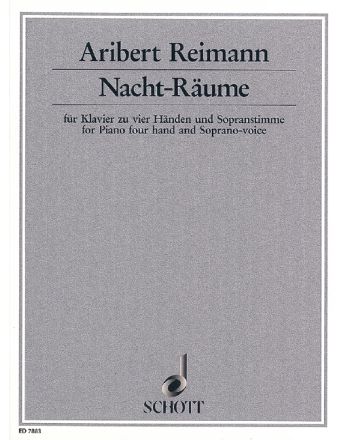 for piano four hand and soprano-voiceComposer: Aribert ReimannMedia Type: Sheet musicBrand: Schott Music
Instrumentation: piano (4 hands) and sopranoProduct number: ED 7883£29.99Not in stock, but can be ordered - usually despatched (or ready for collection) within 7 days -
 nach einem Gedicht von Joseph von EichendorffComposer: Aribert ReimannMedia Type: Sheet musicSeries: Edition Schott
Brand: Ars Viva Verlag
Instrumentation: Baritone and PianoLanguage: GermanProduct number: AVV 26£17.99Not in stock, but can be ordered - usually despatched (or ready for collection) within 7 days -
 nach einem Gedicht von Joseph von EichendorffComposer: Aribert ReimannMedia Type: Sheet musicSeries: Edition Schott
Brand: Ars Viva Verlag
Instrumentation: Baritone and PianoLanguage: GermanProduct number: AVV 116£21.50Not in stock, but can be ordered - usually despatched (or ready for collection) within 7 days -
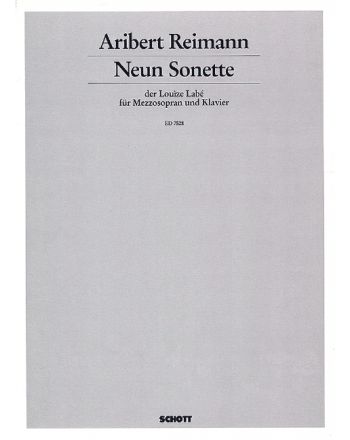 Composer: Aribert ReimannMedia Type: Sheet musicBrand: Schott Music
Instrumentation: Mezzosoprano and pianoLanguage: FrenchProduct number: ED 7528£36.99Not in stock, but can be ordered - usually despatched (or ready for collection) within 7 days


